🔍 Why This Article?
Like any subject that is both technical and essential, choosing your ballistic protection — especially “hard” armor plates — can seem complex, intimidating, even stressful.
This guide won’t recommend an “ultimate” model, sorry. But it will help you make an informed choice suited to your actual needs — not one driven by trends or social media.
📏 1. Choose the Right Reference Standard
Two main standards govern protection levels:
- 🇺🇸 NIJ (National Institute of Justice)
- 🇪🇺 VPAM (Vereinigung der Prüfstellen für Angriffshemmende Materialien und Konstruktionen)
Some non-standard tests (such as the FBI protocol) exist but are rare, especially in Europe.
Key differences:
- 📏 BFD (Back Face Deformation) : the deformation measured in the clay backing behind the plate after impact
- 🎯 Shooting distance : it affects the projectile’s velocity and therefore how violent the impact is
The NIJ standard allows up to 44 mm (1.73 in) of BFD at 15 meters (Level III and IV). VPAM is stricter: 25 mm (1 in) maximum at 5 or 10 meters.
Bottom line: For the same caliber, a VPAM-certified plate will offer better protection than an NIJ plate.
📐 2. Choose the Right Cut and Size
⚠️ The term “SAPI 25×30” is a common mistake. SAPI is a US standard with specific sizes (e.g., SAPI M = 241 x 318 mm, or 9.5 x 12.5 in). The 25×30 cm format (also called 10×12 inches) is a standard format, but distinct from the SAPI format. If the manufacturer you buy from confuses the two, it’s a telling sign of how much they really know.
🧾 Here are the most common formats:
- SAPI : US military format, narrow and long
- 25×30 : classic French format (military, law enforcement, gendarmes), a good balance between protection and mobility
- Shooter’s Cut : more deeply cut upper corners, makes aiming easier
- Swimmer Cut : even more deeply cut corners, ideal for maximum mobility (e.g., swimming)
- Specialized formats : e.g., Bravo plates from Lorica Ingénierie for specialized applications
🛠️ 3. Choose the Right Protection Level
💡 You need to assess the weight-to-protection ratio : the higher the protection, the heavier the plate (especially with ceramic).
The mobility you keep is also a form of protection : some jungle units give up plates to gain endurance and mobility.
Ask yourself the right questions:
- How long does your typical approach phase last?
- What type of enemy weapons and ammunition do you anticipate?
VPAM levels to remember:
- 🛡️ VPAM 6 : 7.62×39 FMJ / PB / FeC (soft core)
- 🛡️ VPAM 7 : VPAM6 + 5.56 SS109 / .308 Win (soft core)
- 🛡️ VPAM 8 : VPAM7 + 7.62×39 armor-piercing incendiary (APIBZ)
- 🛡️ VPAM 10 : VPAM8 + .308 Win hard core / 7.62x54R armor-piercing incendiary
🔎 The NIJ standard focuses more on civilian calibers, while VPAM targets military threats.
👁️ Some manufacturers offer plates for specific calibers and define their protection level by a list of calibers tested, with the mention “per VPAM/NIJ” for reference. This is not a red flag: even if the classification falls outside the standards, that mention (if present) will give you an idea of the maximum deformation allowed for the listed calibers.
🏭 4. Choose the Right Manufacturer
This is probably the most important step. Here are the essential criteria :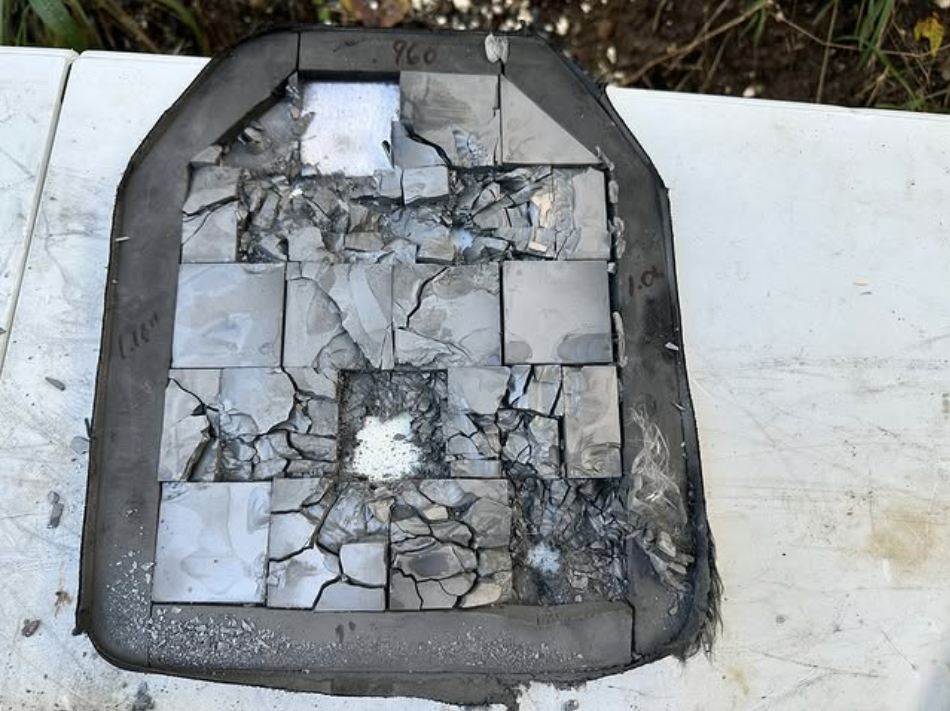
- 📏 Check the accuracy of the sizes listed: if a manufacturer offers “SAPI 25×30” in the same product name, run.
- 🚨 Beware of vague descriptions such as “VPAM6, also stops 7.62x54R”: this means that even if the 7.62x54R does not penetrate, the BFD is higher than the standard allows and could therefore injure or kill you.
- 🔍 Ask for photos of the ceramic tile layout to check that it really is “edge-to-edge”: the term is often misused.
- 💬 Look into field feedback (RETEX), e.g., on the Hexatac Telegram group, which made this article possible.
- 🧪 Ask for the test reports, and check the shooting conditions (distance compliant with the standard?)
- 🔧 Test a plate in real-world conditions : try to share the expense by buying the test plate as a group, to lower the cost per user.
✅ An honest manufacturer has nothing to hide: they will gladly provide the necessary documents and photos.
🧠 Never forget that this is the manufacturer you are going to trust with your life.
🧩 5. Conclusion
You now have everything you need to make a rational, personal choice about your hard armor protection.
🙌 For our part, we recommend products from Lorica Ingénierie, a serious, rigorous, and technically competent French brand.
📚 6. Further Reading
A few links to dig deeper:
- 🔗 FBI Test Protocol – via the Hornady website
- 🔗 Full VPAM standards document – on the VPAM website
- 🔗 NIJ Standard 0101.07 – on the official NIJ website
Tags: hard armor plates, choosing an armor plate, VPAM NIJ protection, ballistic protection level, NIJ VPAM standard, 2025 armor plate buying guide, tactical gear, Lorica Ingénierie